
Freelancing is often marketed as the perfect work arrangement for parents who can’t leave their children alone. It provides parents with flexible hours, remote work, and autonomy over one’s schedule. For busy parents of young toddlers, however, these benefits become challenging to achieve regardless of what kind of family structure they have. Toddlers are quite unpredictable whether they are just a year old. Their behavior is not defined by any calendar. Its all up to their natural growth spurts, changing nap schedules, and sudden emotional tantrums. To survive and thrive while dealing with these changes, parents must adjust their freelancing to match the changes and must not mirror a corporate workload. It must meet both your family time and work life without the other overlapping each other.
Tweaking a freelancing strategy to suit life with a toddler begins with reframing expectations. Your productivity will definitely be different and your ambitions need to be scaled down considerably when you account for children. Success can’t be measured simply with revenue or career growth. But it will be based on peace of mind, sustainability and presence. A freelancer-parent operates in a way they balance out both the need to satisfy their family’s needs while still keeping their work flowing. In order to achieve this, they need to balance everything perfectly and create a work flow that will match their current family situation.
Designing Work Around Energy, Not the Clock
Traditional employment often revolves around fixed hours. But, in freelancing, it allows an alternative approach. Work can be structured around a considered free hour and adjust it accordingly based on how their children’s needs would change while still staying productive. Some parents immediately learn that the quiet mornings when their child isn’t awake or times like nap times can be perfect times to work and be protective. Late afternoons would not be ideal since it is the time when they require snack requests, diaper changes, or imaginative play sessions that cannot be postponed.
Instead of creating blocked times to complete an eight-hour work period, segmented workdays are recommended for freelance parents. Early mornings can be used for mentally draining tasks like writing, strategy meetings, or analysis. Administrative tasks like accounting, invoicing and others can be done in between nap times or laundry. This fluid arrangement acknowledges that an uninterrupted concentration and time is something hard to achieve when you have a toddler in the household.
Freelance parents should also accept that they will be limited with how much they can do, especially when they have toddlers. Sleep is one factor that will be affected by freelancing while with toddlers, causing sleep deprivation that can dull one’s cognitive skills and affect productivity. On days when a child is sick or clingy, freelance parents need to adjust their schedule to focus on their child more than their work. Parents will also need to learn the subtle art of creating periods in between project timelines ensuring that even if they miss a day, it will not affect the entire work week.
Curating the Right Client Mix
Freelancing offers the autonomy for parents to choose projects, and for parents of young children, this choice is critical given that they don’t have much time to take on many assignments. Not all clients are created equal as well, so it is best to have a small but understanding clientele. Some demand instant responses and late-night calls. Others value freelancers who can do their deadlines while respecting their current situation. Adjusting their freelancing strategy to fit their family situation with a carefully curated portfolio of clients who understand your unique situation and give them realistic timelines is a great strategy to use.
Clear communication from the beginning when a parent gets a freelancing job can prevent future tensions between them and their clients. By letting clients understand the family’s situation and how it will affect response times, availability windows, and turnaround periods, it creates a means to discuss how an arrangement can be made to make the project work. Many clients appreciate transparency from their freelancers, especially when quality work is guaranteed despite these issues.
Scope matters as well. Taking on smaller but high paying projects may be more sustainable than having many small assignments to make ends meet. This approach also reduces multitasking and administrative load division, reducing stress and adding more family time. It also reinforces the notion that strategic selection allows freelancing success more efficiently than constant work.
Redefining Productivity at Home
Working in a home environment does have its setbacks because it can blur boundaries between personal and professional life since freelancing parents are working from home. Toys may be scattered across the floor within sight of a laptop, causing a distraction or safety hazard. Leaving the laundry on in the background while in a video call can be heard by everyone in the discussion. While it can be nigh impossible to achieve the perfect balance of personal life and work life at home, freelancer parents utilize many strategies to create distinctions in their home to ensure they can separate work from personal life even if they work from home.
A designated workspace, even a simple one, signals a shift into work mode once it is fully set up. Closing a door or wearing noise-cancelling headphones can also create a psychological boundary since it ensures one does not hear the distractions around and the family knows it is time to be quiet. What freelancing parents should also remember to do is the deliberate act of ending the day by closing the computer, cleaning the workspace and focusing on the family to make the day worthwhile.
Productivity must also be adjusted according to the family’s needs. A parent who completes three hours of highly focused work while ensuring a toddler feels secure and engaged can do wonders for their career. However, parents should avoid comparing their output with the pre-parenthood standards because it may create unnecessary guilt. Remember, parenthood changes many things, especially with freelancing since children will definitely throw any schedule off the loop.
Leveraging Support Without Guilt
Independence is often central to a freelancer’s identity because the work life it offers is flexible and the freelancer is in full control over their time and work. But, with a toddler, this becomes difficult and will require the help of others to get the job done, with this help handling the family while work is ongoing. Some of the ways that can help with freelancing parents include hiring childcare for a few hours a week, getting help from family members, or participating in cooperative playgroups, each option creating a brief window of uninterrupted work.
Accepting help from others does not mean it should be considered as a sign of inadequacy and weakness. It is a sign that a person is aware of their time constraints and not afraid to seek help to get the job done. Even the smallest changes to how one can handle their work can go a long way in improving their productivity. Multitasking may be ok in small tasks, but it can wear a person out and affect the quality of their work.
The emotional barrier presented by children can be stronger than the logistical challenges work provides if one looks into how each child is different.. Parents may feel pressure to be constantly present. Yet sustaining a freelance career contributes to long-term family stability. Viewing external support as an investment rather than a compromise can ease internal conflict.
Building Predictable Systems in an Unpredictable Season
Toddlers follow routine as they grow, even if they grow up so fast. Freelancing can be adapted to the unpredictability of children and make a flexible schedule around it even if they disrupt it. Looking into their nap times and scheduling any work in those periods is a great example on how to use time more efficiently despite how unpredictable children are.
Project management tools, automated invoicing systems, and templated proposals can also streamline the freelancing business model.The more streamlined the backend of the freelance business, the less time and mental energy it consumes. Automation also becomes an ally in a household where mental bandwidth is shared between client briefs and bedtime stories.
Simplifying offerings can also lighten the load. Narrowing services to core strengths reduces preparation time and makes work faster. Clarity in the freelancing business structure also translates into calmer transitions between professional and parental roles.
Guarding Against Burnout
The dual intensity of freelancing and toddler parenting can create an undercurrent of exhaustion. The temptation to work late into the night after a child sleeps may appear productive, but chronic sleep sacrifice accumulates consequences. Burnout threatens both their quality of work and quality of parenting.
Tweaking freelancing for this reason involves realistic pacing. Short-term revenue spikes may not equate to ideal long-term work. Understanding and recognizing the signs of stress and burnout – like irritability, declining focus, or persistent fatigue – reduces the strain on the body before any major damage occurs.
Rest, though difficult to prioritize with how busy family life can be, should also be done as much as possible while still balancing everything. Rest fuels creativity, patience, and resilience, which is important if freelancing brings success. Parents who care for their own well-being can inspire their children to follow their example in the future, ensuring they work without compromising their health and learn how to be sustainable.
Embracing a Season of Intentional Growth
Freelancing while raising a toddler may not be the right time for aggressive expansion or dramatic scaling career wise. But, it may instead be a time for steady consolidation. Skills can be improved, client relationships can be strengthened, and processes can mature quietly in the background of family life.
This does not mean one’s ambition disappears. Rather, the mindset changes to a more focused and intentional perspective. A freelancer parent also becomes more open in looking on all sides of a project, from its career implications to what the family needs. Decisions become holistic rather than purely focused on career growth and financial benefits.
Over time, toddlers will grow more independent and slowly learn the ropes themselves. Nap schedules stabilize, preschool begins, and daily rhythms shift to accommodate these changes. The foundations built during these demanding early years from what their parents do at home can support the development of these children’s larger professional aspirations now. By tweaking freelancing thoughtfully, parents can create a flexible structure capable of expanding when life allows and give children a sample they can follow for their future.
Crafting a Sustainable Freelancing Career as Parents with Harmony
There is no correct formula for combining freelancing with the unpredictability of having toddlers at home. The journey requires continuous adjustment. There will be days when it will feel smooth and balanced; others will test one’s patience and adaptability. What makes it special is the fact that in a sustainable freelance parenting, it doesn’t need to be perfect, but it can be adapted to all situations.
By designing one’s work around the right energy, the right clients, available resources and redefining productivity, busy parents can reshape freelancing into a framework that supports family life rather than competes with it. The goal is not to fit parenting into a career but to weave a career around the realities of parenting.
In doing so, freelancing becomes more than an alternative employment model. It becomes a lifestyle that is carefully curated to meet the professional and personal growth of the parent. Whether one has one toddler or more, having some flexibility and doing minor adjustments on the fly can make freelancing not as a juggling act but into a workable, meaningful rhythm.
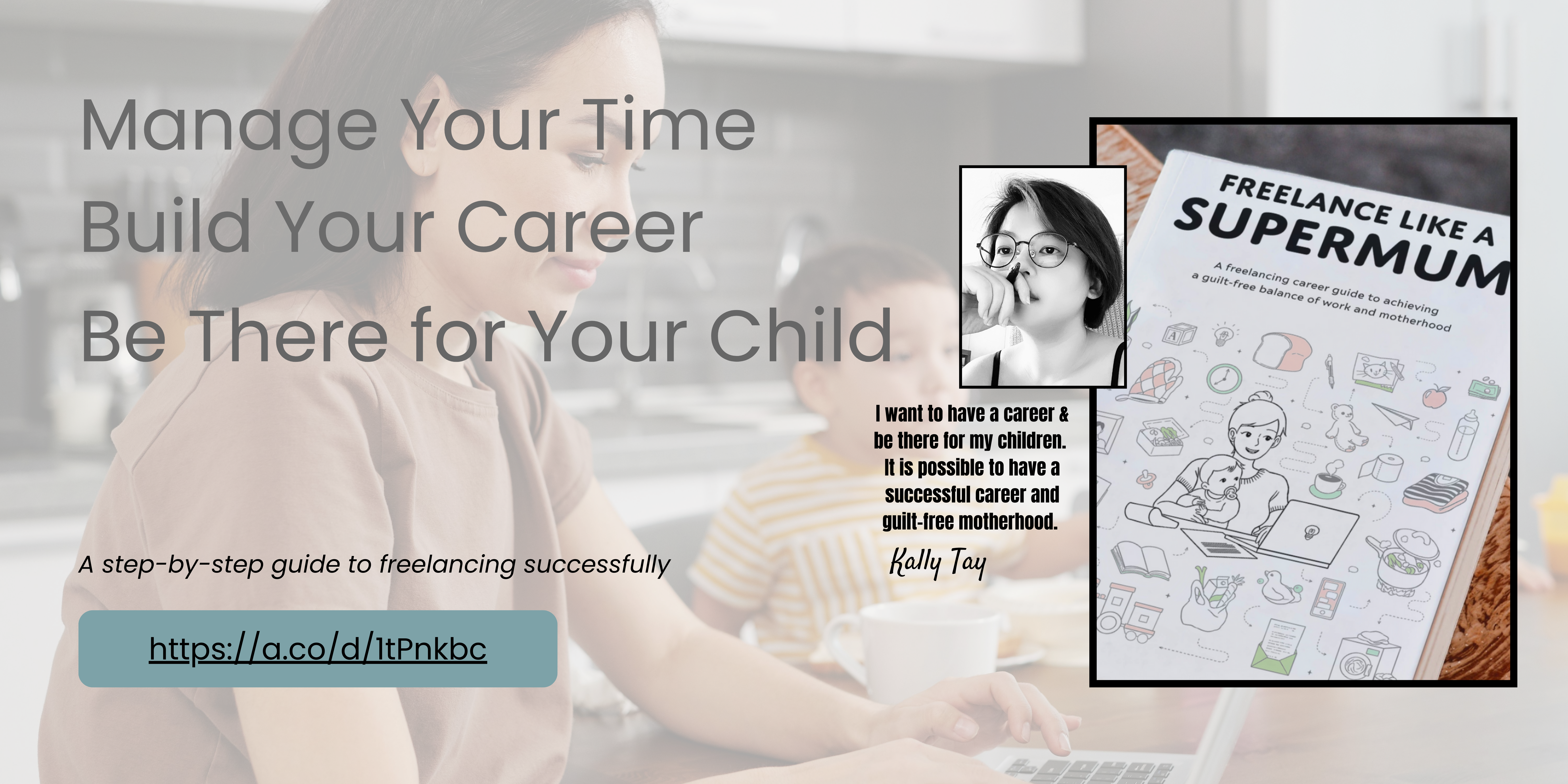
If this article helped at all, imagine what the book can do. Grab my guide to freelancing success on Amazon and help keep the caffeine (and writing) flowing!
 MiddleMe
Praying for you, my dear friend, as I know you have little ones at home.❤️&🙏, 🤠
LikeLike